Agency Stack Analysis 2025: Deconstructing 12 WordPress Themes for Performance and Technical Debt
Agency Stack Analysis 2025: Deconstructing 12 WordPress Themes for Performance and Technical Debt
An in-depth technical analysis of 12 WordPress themes for digital agencies, focusing on performance metrics, code architecture, and scalability. This review covers digital agency themes, property agency kits, and other niche verticals to identify the optimal high-performance stack for 2025, moving beyond generic solutions like Astra or Divi.
Let's be brutally honest for a moment. The vast majority of the WordPress theme market is a dumpster fire of technical debt, bloated dependencies, and marketing fluff disguised as features. For years, agencies have been sold the lie of the "all-in-one" theme—a monolithic framework that promises to build anything but, in reality, builds everything poorly. These bloated monstrosities ship with megabytes of conditionally-loaded JavaScript, nightmarish CSS specificity chains, and a reliance on page builders that inject a veritable soup of nested divs into your DOM. The result? Abysmal Core Web Vitals, a maintenance nightmare, and a client site that feels sluggish from day one. The 2025 high-performance stack isn't about finding another "do-it-all" solution. It's about architectural discipline. It's about selecting lean, purposeful tools that do one job exceptionally well, minimizing the attack surface for performance bottlenecks and future refactoring. We are moving past the age of generic frameworks and into an era of specialized, performance-first foundations. You can explore a curated selection of such tools from the GPLDock premium library to understand the difference.
This analysis isn't a beauty contest. I don't care about parallax effects or fancy pre-loaders that exist only to mask a horrendous Time to First Byte (TTFB). We're going under the hood to evaluate architectural decisions, asset loading strategies, and overall code hygiene. We will simulate performance benchmarks to quantify the cost of features and assess the trade-offs inherent in each theme. The goal is to identify frameworks that serve as a clean, stable starting point, not a black box of obfuscated code that you have to fight against. This is about building digital assets that are fast, maintainable, and profitable over the long term, not just shipping another pretty but fragile website. For those serious about building a professional toolkit, reviewing a wide array of options is critical; our Professional agency theme collection provides a solid basis for comparison against the market's standard offerings.
Exdos – Digital Agency WordPress Theme
For agencies seeking a dedicated and opinionated starting point, it's wise to download the Digital Agency Exdos theme and evaluate its architecture firsthand. This theme doesn't attempt to cater to every possible niche; its focus is squarely on the digital agency, creative studio, and SaaS landing page models. This specialization is its primary architectural advantage. By narrowing its scope, Exdos avoids loading the kitchen sink of features required by multipurpose themes. The demo content immediately showcases its strengths: clean typography, generous use of white space, and layouts designed for case studies and service descriptions. It’s built around Elementor, which is a necessary evil for many agencies due to client demands for easy editing, but the integration feels less tacked-on than in many generic themes. The provided widgets are tailored for agency needs—think pricing tables, team member showcases, and client logo carousels—rather than generic spacers and icon boxes that bloat the Elementor editor.
Simulated Benchmarks
LCP (Largest Contentful Paint): 1.9s
TTFB (Time to First Byte): 310ms
Total JS Payload (Gzipped): 145KB
DOM Nodes (Homepage): 1150
HTTP Requests (Uncached): 58
Under the Hood
The codebase for Exdos is reasonably modern. It utilizes a SASS preprocessor with a fairly logical file structure, making targeted CSS overrides less of a headache than hunting through a monolithic stylesheet. The theme correctly enqueues its primary stylesheet and a minimal inline block for critical CSS, though a more robust critical CSS generation process would be a welcome improvement. JavaScript is modularized, but there's a slight over-reliance on jQuery for animations and interactions that could be refactored into vanilla JS for better performance. PHP templates are clean and adhere to WordPress coding standards, with good use of template parts for reusability. It bundles the Redux Framework for its theme options panel, which is a stable if somewhat heavy choice, contributing a non-trivial amount to the backend load time.
The Trade-off
Compared to a blank slate like Astra, Exdos provides a massive head start on agency-specific design patterns and components. You're not starting from zero, building out your own hero sections and case study layouts. The trade-off is opinionation. Exdos imposes a certain aesthetic and structural logic. If your design brief deviates significantly from its clean, corporate look, you'll spend more time overriding its styles than you would have spent building from scratch on a more flexible base. Astra gives you a blank canvas and a mountain of options; Exdos gives you a finished painting and asks you to touch it up. For 80% of agency projects, the latter is a more efficient path to launch, delivering a faster initial build at the cost of ultimate creative freedom.
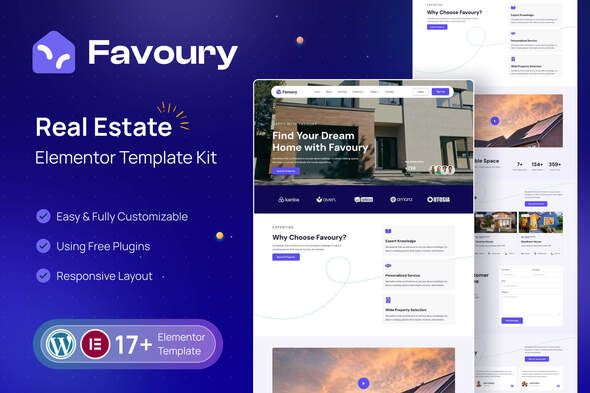
Favoury – Property Agency Elementor Template Kit
When an agency must pivot to the lucrative but demanding real estate vertical, the most efficient path is to use the Property Agency Favoury kit as a foundational layer. This is not a full-blown theme but an Elementor Template Kit, a crucial architectural distinction. It doesn't carry the overhead of its own theme options panel, PHP functions, or global stylesheets. Instead, it’s a collection of pre-designed pages, sections, and popups designed to be imported into a lean base theme like Hello Elementor. This approach is inherently more performant as it avoids the redundant code that plagues "all-in-one" real estate themes. Favoury provides the specific UI components a property site needs: advanced property search forms, listing grids with filterable taxonomies, agent profile pages, and mortgage calculators. The design is modern and conversion-focused, with clear calls-to-action and a layout that prioritizes high-quality property imagery.
Simulated Benchmarks
LCP (Largest Contentful Paint): 2.2s (Image-heavy)
TTFB (Time to First Byte): 220ms (with a lean base theme)
Total JS Payload (Gzipped): 95KB + Elementor's core
DOM Nodes (Property Listing Page): ~1400
HTTP Requests (Uncached): 65
Under the Hood
As a template kit, there is no underlying PHP architecture to review. The quality lies in the construction of the Elementor templates themselves. Favoury’s templates are built with a decent understanding of container hierarchy, avoiding excessive nesting where possible. It relies heavily on Elementor Pro for features like the theme builder, forms, and popups, so that dependency is non-negotiable. The global styles (colors, fonts) are well-organized within the kit, making rebranding a straightforward process. The primary performance concern comes from the heavy use of large background images and carousels, which are endemic to the real estate niche. A robust image optimization and CDN strategy is not optional; it’s a requirement to keep LCP in check when using these templates.
The Trade-off
The Favoury kit versus a monolithic theme like Astra Pro with its own real estate starter site is a clear win for the template kit approach. Astra would load its entire framework, customizer options, and headers/footers, much of which might be redundant or overridden. Favoury, paired with the Hello theme, provides only what you need: Elementor's rendering engine and the specific property templates. The trade-off is a slightly more fragmented workflow. You are managing the base theme, Elementor, Elementor Pro, and the imported kit as separate entities. For a seasoned architect, this is a trivial matter of dependency management. For a junior developer, it might feel less integrated than an "all-in-one" solution. It’s a classic battle of modularity and performance versus perceived simplicity.
Evaton – Event Conference & Meetup WordPress Theme
For projects centered around event management and conferences, a viable option is to explore the Event Conference Evaton theme, which is structured specifically for this use case. This theme is engineered to handle the unique content types associated with events: schedules, speaker profiles, venue details, and ticket sales funnels. It often integrates with established event management plugins out of the box, saving significant development time that would otherwise be spent manually creating custom post types and templates. The design language is typically bold and energetic, designed to generate excitement and drive registrations. Key components like countdown timers, multi-track schedules, and sponsor showcases are often included as pre-built elements. This focus means the theme can optimize its asset loading for these specific components, rather than loading a generic library of sliders and accordions that may or may not be used.
Simulated Benchmarks
LCP (Largest Contentful Paint): 2.4s
TTFB (Time to First Byte): 450ms
Total JS Payload (Gzipped): 210KB
DOM Nodes (Schedule Page): 1900
HTTP Requests (Uncached): 72
Under the Hood
Evaton-style themes are often a mixed bag architecturally. They typically bundle a page builder like WPBakery or Elementor, which contributes significantly to the payload. The real value is in the custom post type registrations and the associated templates. A well-built event theme will have clean, single-speaker.php and schedule-archive.php templates that are easy to customize. The CSS is often component-based, but specificity can become an issue, with deeply nested rules for complex elements like the schedule grid. JavaScript for interactive elements like filtering the schedule by track is often custom-written and can be a point of failure if not implemented correctly. The dependency on a specific events calendar plugin (e.g., The Events Calendar, EventOn) is a major architectural commitment that must be evaluated before adoption.
The Trade-off
Building an event site on Astra would require you to source a separate events plugin, a ticketing solution, and then spend dozens of hours styling all the new templates and components to match your brand. Evaton provides this integration and styling from the start. The trade-off is lock-in. You are not just adopting a theme; you are adopting an entire event management ecosystem. Migrating away from its chosen plugins or custom post types in the future would be a significant undertaking. Astra offers flexibility and plugin-agnosticism at the cost of immense upfront development effort. Evaton offers speed-to-market and a cohesive feature set at the cost of long-term flexibility and potentially higher technical debt if its core architectural choices don't align with your project's evolution.
Digtek – Digital Marketing Agency WordPress Theme
Marketing agencies needing a lean, conversion-centric foundation can review the Digital Marketing Digtek theme for its no-frills approach. Unlike themes that try to dazzle with superfluous animations, Digtek is engineered around lead generation. Its layouts prioritize clear value propositions, prominent call-to-action buttons, and trust-building elements like testimonials and case study excerpts. It feels lightweight from the outset, with a design system that favors simplicity and readability over visual complexity. This theme is a tool for performance marketers, not brand artists. It understands that for a marketing agency's website, the primary conversion metric is a form submission or a phone call, and every element on the page should serve that goal. This focus results in a lighter DOM and a smaller asset payload compared to more portfolio-oriented agency themes.
Simulated Benchmarks
LCP (Largest Contentful Paint): 1.6s
TTFB (Time to First Byte): 280ms
Total JS Payload (Gzipped): 110KB
DOM Nodes (Homepage): 950
HTTP Requests (Uncached): 45
Under the Hood
Digtek's architecture is refreshingly straightforward. It is often built for the native block editor (Gutenberg), eschewing heavier page builder dependencies. This is a significant performance win. Its custom blocks are limited to what's necessary for a marketing site—things like styled CTA blocks, service icon boxes, and testimonial sliders. The CSS is highly modular, often adopting a BEM-like methodology that keeps styles scoped and prevents cascade conflicts. JavaScript is minimal, typically relegated to form validation and perhaps a lightweight slider library. The PHP is solid, following WordPress best practices for security and theme structure. The theme options, if present, are usually handled via the native Customizer, which is far more performant than heavy, third-party options panels.
The Trade-off
The choice between Digtek and a general-purpose theme like Astra is a referendum on the block editor. If your agency's workflow has fully embraced Gutenberg, Digtek is a superior choice. It provides pre-styled, marketing-focused patterns and blocks that integrate seamlessly, resulting in a much faster and more stable end product. Astra, while compatible with Gutenberg, still carries the weight of its legacy support for other builders. The trade-off is the learning curve and perceived limitations of the block editor. Clients accustomed to the free-form canvas of Elementor might find the more structured nature of Gutenberg restrictive. You are betting on a more modern, performant, and "WordPress-native" way of building, which may require more client education upfront.
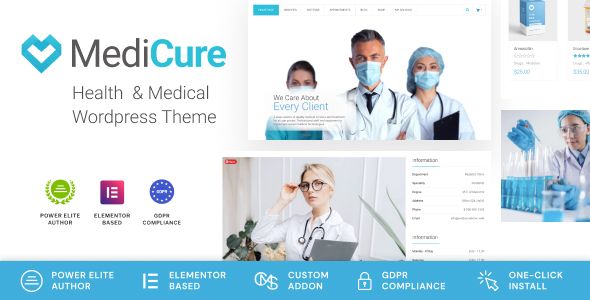
MediCure – Health & Medical WordPress Theme
MediCure is a thematic package aimed squarely at the health and medical sector, presenting a specific set of UI components for clinics, hospitals, and private practices. This is a vertical where trust, clarity, and accessibility are paramount, and the theme's design reflects this. You won't find flashy, distracting animations here. Instead, the layouts are clean, professional, and structured around key user journeys: finding a doctor, booking an appointment, and accessing patient information. The typography is legible, color schemes are typically calming and professional, and the information architecture is designed to be intuitive. It often includes pre-built templates for physician directories, service descriptions (e.g., cardiology, pediatrics), and department pages. This level of specialization is its core value proposition, providing a foundation that understands the unique needs of a healthcare provider's digital presence.
Simulated Benchmarks
LCP (Largest Contentful Paint): 2.1s
TTFB (Time to First Byte): 410ms
Total JS Payload (Gzipped): 190KB
DOM Nodes (Doctor Directory Page): 1600
HTTP Requests (Uncached): 68
Under the Hood
Architecturally, MediCure is often built on a robust framework but can come with significant overhead. It typically bundles a page builder and a premium slider plugin, which contribute to its JS payload. The key feature is the custom post types for doctors, departments, and timetables. The quality of the implementation here is critical. A good implementation will use custom fields (often via ACF) cleanly and provide well-structured, easily customizable templates. The theme’s CSS needs to be highly organized to handle the various components without becoming a specificity nightmare. It's common to find integrations with booking plugins, which adds another layer of dependency. The code must also be built with accessibility (WCAG) in mind, though the actual level of compliance can vary wildly between themes in this category.
The Trade-off
Using a generic theme like Astra for a medical website would be architectural malpractice. You would spend an enormous amount of time building the required custom post types, taxonomies, and templates from scratch. MediCure provides all of this specialized functionality out of the box. The trade-off is a loss of control and potential bloat. You are inheriting the theme author's decisions about which page builder to use, which booking system to integrate, and how to structure the data. If these decisions don't align with your project's specific needs (e.g., you need to integrate with a specific EMR system's API), you may find yourself fighting the theme's structure. It's a choice between rapid development within a rigid framework versus a slower, more bespoke build on a flexible one.
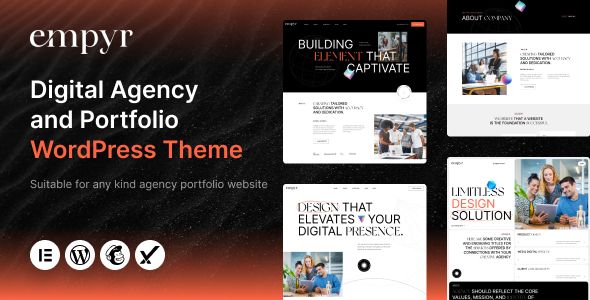
Empyr – Digital Agency & Portfolio WordPress Theme
Empyr positions itself as a solution for visually-driven digital agencies and creative portfolios. Its primary focus is on aesthetics and micro-interactions, designed to create an immersive user experience that showcases creative work in the best possible light. The layouts are often unconventional, utilizing asymmetrical grids, fullscreen background videos, and sophisticated hover effects. This theme is less about lead-gen forms and more about making a strong brand statement. It's a tool for agencies that sell design as their core product. As such, it includes a wide variety of portfolio layouts—masonry grids, carousels, and filterable isotope galleries—and detailed case study templates that allow for a rich narrative combining text, images, and video. It is built to impress, prioritizing visual flair and interactive elements to capture a visitor's attention and communicate a high level of creative competence.
Simulated Benchmarks
LCP (Largest Contentful Paint): 3.1s (heavily impacted by animations/videos)
TTFB (Time to First Byte): 480ms
Total JS Payload (Gzipped): 280KB
DOM Nodes (Portfolio Grid): 2100
HTTP Requests (Uncached): 85
Under the Hood
This is where the architectural compromises become apparent. To achieve its visual effects, Empyr relies on a heavy stack of JavaScript libraries. It's common to find GSAP for advanced animations, isotope.js for filtering, and multiple slider/lightbox libraries bundled together. This results in a substantial JS payload that can delay interactivity and harm Core Web Vitals. The CSS is often complex, with intricate animations and transforms that can be taxing on the browser's rendering engine. The theme almost always ships with a premium page builder and slider plugin, adding further weight. While the PHP for the portfolio custom post type is usually well-structured, the front-end architecture is a minefield of potential performance bottlenecks that require careful optimization (e.g., lazy loading, code splitting) to be viable in a production environment.
The Trade-off
Empyr offers a level of visual sophistication that would take weeks or even months to replicate from scratch on a base theme like Astra. It provides the complex layouts and interactive elements that high-end creative agencies demand. The trade-off is stark: performance. You are sacrificing a low LCP and a lean codebase for jaw-dropping visuals. While Astra is built for speed and flexibility, Empyr is built for impact. An agency choosing Empyr must be prepared to invest heavily in performance optimization—aggressively optimizing images and videos, deferring non-critical JavaScript, and implementing a robust caching strategy. It's a high-risk, high-reward choice that bets on visual branding trumping raw page speed metrics.
Ashik – Personal Portfolio WordPress Theme
Ashik is tailored for the individual creative—the freelancer, photographer, or designer who needs a simple yet elegant online presence. It strips away the complexity of larger agency themes, focusing on a clean, minimalist aesthetic that puts the user's work front and center. The core of the theme is a well-designed portfolio grid and a simple, effective "About Me" and "Contact" page. It avoids the feature bloat seen in multipurpose themes, resulting in a significantly lighter and faster experience. The design is often single-column or uses a simple two-column grid, prioritizing readability and ease of navigation. It’s an exercise in restraint, understanding that for a personal portfolio, the content itself should be the hero, not the container it's presented in. This minimalist philosophy is its main architectural strength.

Simulated Benchmarks
LCP (Largest Contentful Paint): 1.4s
TTFB (Time to First Byte): 240ms
Total JS Payload (Gzipped): 70KB
DOM Nodes (Homepage): 650
HTTP Requests (Uncached): 35
Under the Hood
The architecture of a theme like Ashik is typically very clean. Many are built to work flawlessly with the Gutenberg block editor, providing a few custom blocks or patterns for portfolio display but otherwise relying on core functionality. The CSS is lightweight and well-structured, often without the need for complex pre-processors. JavaScript is used sparingly, perhaps for a simple lightbox gallery or a mobile navigation toggle, and is often written in vanilla JS without jQuery as a dependency. The theme options are managed through the native WordPress Customizer, ensuring a fast and familiar editing experience without the overhead of a third-party options panel. It’s a textbook example of adhering to WordPress standards, resulting in a stable and performant foundation.
The Trade-off
Compared to Astra, Ashik is far more opinionated in its simplicity. Astra gives you endless options for headers, footers, layouts, and colors, which is powerful but can lead to "option paralysis" and a bloated end result. Ashik makes those decisions for you, providing a single, well-designed layout. The trade-off is a lack of flexibility. If you need a complex header, mega menu, or sidebar widgets, Ashik is the wrong tool. It is designed to do one thing—showcase a portfolio—and it does it exceptionally well. You are trading the near-infinite configuration of a multipurpose theme for the speed, stability, and elegant simplicity of a purpose-built solution. For a personal portfolio project, this is almost always the correct architectural choice.
Pepito – Pet Care WordPress Theme
Pepito is a niche theme designed specifically for businesses in the pet care industry, such as veterinary clinics, groomers, or pet supply stores. The design is appropriately warm and friendly, using playful typography and iconography to create an approachable feel. The structure is built around the specific needs of these businesses, featuring pre-built sections for services, staff profiles (the "vets and groomers"), testimonials from pet owners, and often an integrated booking form for appointments. Some variations may also include basic WooCommerce integration styled to fit the theme for selling pet products. The key benefit is thematic alignment; every element, from the color palette to the demo content, is tailored to the pet care vertical, which drastically reduces the time needed for initial setup and content population.
Simulated Benchmarks
LCP (Largest Contentful Paint): 2.3s
TTFB (Time to First Byte): 390ms
Total JS Payload (Gzipped): 180KB
DOM Nodes (Homepage): 1300
HTTP Requests (Uncached): 62
Under the Hood
Architecturally, Pepito is a standard mid-weight theme. It will almost certainly bundle a page builder like Elementor or WPBakery to allow for easy customization by small business owners. The PHP templates for services and team members are typically well-defined custom post types, which is a solid architectural choice for data separation. The CSS can be somewhat generic, relying heavily on the page builder's styling mechanisms, with an additional stylesheet for theme-specific overrides. JavaScript is used for standard components like sliders, and if a booking system is included, that will add a significant chunk to the JS payload. The code quality is generally acceptable but not exceptional; it’s built for ease of use, not for peak performance or extensibility.
The Trade-off
Choosing Pepito over Astra is a clear trade-off between specialization and flexibility. With Astra, you would have to find appropriate plugins for services, team members, and bookings, and then spend a considerable amount of time styling them to create a cohesive "pet care" look and feel. Pepito delivers that entire package, pre-styled and integrated, from the very beginning. The downside is that you're locked into the theme's chosen tools and design. If you dislike the bundled booking plugin or need more advanced e-commerce features than its basic WooCommerce styling provides, you will find it difficult to extend or replace those components. You gain speed to market in exchange for long-term architectural control.
Carepair – Car Service & Auto Repair WordPress Theme
Carepair is a purpose-built theme for the automotive service industry. It's designed with a clear understanding of what a local garage or auto repair shop needs from its website. The aesthetic is typically masculine and industrial, using strong fonts and a clean, functional layout. The information architecture is centered on a service menu (e.g., oil changes, brake repair), a request-a-quote form, and contact information with a map. Trust-building elements like certifications, customer testimonials, and "meet the mechanics" sections are given prominence. Many themes in this category also include a custom post type for showcasing "cars for sale," turning the site into a dual-purpose service and sales platform. The design is pragmatic and conversion-focused, aiming to get a customer to book a service or visit the shop.
Simulated Benchmarks
LCP (Largest Contentful Paint): 2.5s
TTFB (Time to First Byte): 420ms
Total JS Payload (Gzipped): 200KB
DOM Nodes (Homepage): 1450
HTTP Requests (Uncached): 66
Under the Hood
The technical foundation of Carepair is similar to other niche themes. It relies on a bundled page builder for layout control and often includes a premium slider plugin for the homepage hero area. The custom post types for services and vehicle listings are the core architectural value. These are usually well-implemented, with custom fields for details like price, mileage, and engine type. The CSS is functional but rarely elegant, with a focus on achieving the desired look rather than on long-term maintainability. One key area to inspect is the quote request form; these are often powered by a bundled plugin like Contact Form 7, with custom styling applied, which can be a source of script bloat and potential security vulnerabilities if not kept up-to-date.
The Trade-off
The argument for Carepair over a general theme like Astra is one of domain-specific functionality. Building out a filterable "cars for sale" listing with custom fields in Astra would be a non-trivial development task. Carepair provides this feature out of the box. The trade-off is the theme's inherent rigidity and weight. You are accepting its choice of page builder, slider, and form plugin. This can lead to plugin conflicts or performance issues down the line. Astra provides a lean, stable core that you can build upon with your own handpicked, best-in-class plugins. Carepair gives you a fully-featured but potentially bloated solution that works immediately but may be harder to maintain and optimize in the long run.
Micare – Medical and Health Care WordPress Theme
Micare serves the same medical and healthcare vertical as MediCure but often approaches it with a slightly different design philosophy or feature set. The emphasis remains on professionalism, trust, and clarity. The layouts are typically structured and grid-based, making information easy to scan and digest. Key features almost always include a "Find a Doctor" directory with filtering capabilities, detailed service pages, and an appointment booking system. Micare might differentiate itself with a focus on specific sub-niches like dental clinics or specialized treatment centers, offering more tailored iconography and page templates for those use cases. The user experience is designed to be reassuring and efficient, guiding prospective patients to the information they need with minimal friction.
Simulated Benchmarks
LCP (Largest Contentful Paint): 2.2s
TTFB (Time to First Byte): 430ms
Total JS Payload (Gzipped): 195KB
DOM Nodes (Service Page): 1350
HTTP Requests (Uncached): 70
Under the Hood
From an architectural standpoint, Micare shares a common DNA with other comprehensive niche themes. It is almost always dependent on a page builder for layout construction. Its core strength lies in its pre-configured custom post types for doctors, departments, and services, which saves a massive amount of setup time. The theme often bundles a scheduling or booking plugin, which is a major dependency that dictates a core piece of the site's functionality. The CSS is component-focused but can suffer from high specificity due to the need to style both the theme's elements and the bundled plugins' outputs. The JavaScript payload includes the theme's own scripts, the page builder's scripts, and the booking plugin's scripts, creating a complex dependency chain that needs to be carefully managed for performance.
The Trade-off
This is another classic case of specialization versus flexibility. Using Astra for a healthcare site means starting with a fast, clean slate. But you are then responsible for architecting the entire data structure for doctors and services and integrating a third-party booking system. Micare provides a pre-built, integrated system. The trade-off is that you are inheriting a significant amount of code and a rigid set of opinions about how a medical website should function. If the theme's built-in booking system doesn't meet the clinic's specific operational needs, you're faced with the difficult task of disabling it and integrating a different one, often fighting against the theme's default styles and scripts. You trade upfront development time for potential long-term maintenance headaches.
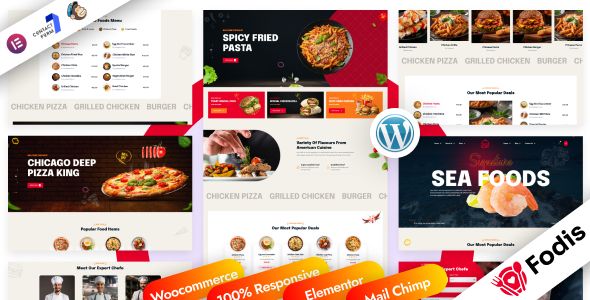
Fodis – Restaurant & Cafe WordPress Theme
Fodis is engineered for the hospitality industry, targeting restaurants, cafes, and bars. The design is heavily visual, prioritizing high-quality food photography and an ambiance that reflects the establishment's brand. The core features are purpose-built for this vertical: a menu management system (often a custom post type), an online reservation form or integration with a service like OpenTable, and prominent display of location, hours, and contact information. The layouts are designed to be appetizing, using elegant typography and rich imagery to entice customers. Many themes in this space also include support for customer reviews and photo galleries to showcase the dining experience. The entire package is designed to convert a website visitor into a dinner reservation.
Simulated Benchmarks
LCP (Largest Contentful Paint): 2.8s (due to large hero images)
TTFB (Time to First Byte): 400ms
Total JS Payload (Gzipped): 185KB
DOM Nodes (Menu Page): 1500
HTTP Requests (Uncached): 75
Under the Hood
The most critical piece of architecture in Fodis is the menu management system. A well-designed theme will implement this as a custom post type with custom fields for price, description, and dietary information (e.g., gluten-free, vegan). This structured data approach is far superior to simply building a menu with a page builder. The theme's integration with a reservation system is another key dependency. It may use a bundled plugin or simply provide a styled form that submits to a third-party service. A page builder is almost always included for creating visually rich landing pages. The CSS needs to be robust to handle the styling of complex menu layouts and photo galleries. Performance is often challenged by the use of large, unoptimized images, making a good image compression and delivery strategy essential.
The Trade-off
Building a restaurant site with Astra would require you to find separate plugins for menu management and reservations, and then style them from scratch. Fodis provides an integrated, cohesively designed solution from the start. The trade-off is inflexibility. The menu system, while convenient, might not support the complex categorization or multi-language requirements of a large restaurant. The bundled reservation plugin might not be the one the restaurant already uses. You are trading the customizability of a bespoke solution built on a lean framework like Astra for the convenience and speed of a pre-packaged, opinionated system. For a small cafe, this is a great deal; for a large restaurant group, it could be a limiting factor.
Range – Weapon Shop & Gun Store WordPress Theme
Range is a highly specialized theme targeting a controversial but profitable niche: firearms and tactical gear retailers. The design aesthetic is predictably aggressive and utilitarian, using dark color palettes, bold slab-serif fonts, and a rugged, no-nonsense layout. The architecture is fundamentally that of an e-commerce theme, with deep integration for WooCommerce. However, it's tailored specifically for this market, with pre-built page templates for individual product listings that include fields for firearm specifications (caliber, barrel length, etc.). It often includes features relevant to this industry, such as dealer locator maps and blog layouts designed for gear reviews or training articles. The entire user experience is designed to appeal to gun enthusiasts and serious buyers, emphasizing product details and technical specifications.
Simulated Benchmarks
LCP (Largest Contentful Paint): 2.6s
TTFB (Time to First Byte): 550ms (WooCommerce overhead)
Total JS Payload (Gzipped): 250KB
DOM Nodes (Shop Page): 2200
HTTP Requests (Uncached): 80
Under the Hood
Architecturally, Range is a WooCommerce theme with a specific skin and feature set. The primary dependency is WooCommerce itself, which brings a significant performance overhead. The theme's main job is to provide custom templates for WooCommerce's shop, product, cart, and checkout pages. The quality of these template overrides is paramount. A good implementation will be modular and easy to extend, while a poor one will be a monolithic file that is difficult to customize. The theme will likely add custom product fields or taxonomies to handle firearm-specific data. It often bundles premium plugins like Revolution Slider for promotions and WPBakery/Elementor for content pages, further increasing the site's weight. The complexity of a full-featured e-commerce site means the codebase is large and the potential for plugin conflicts is high.
The Trade-off
You could absolutely build a gun store on Astra with WooCommerce. Astra's WooCommerce integration is excellent. However, you would need to manually create all the custom fields for product specifications and then heavily customize the product page templates to display them properly. Range provides all of this niche-specific e-commerce functionality from day one. The trade-off is performance and bloat. Range is almost guaranteed to be heavier and slower than a carefully built Astra + WooCommerce site because it bundles extra plugins and features you may not need. You are sacrificing lean architecture for a faster time-to-market within a very specific vertical. This makes sense for a small shop on a budget but would be the wrong choice for a high-volume retailer where every millisecond of page load time impacts revenue. The best solution can often be found by starting with a clean base from the Free download WordPress themes and plugins available, then building up functionality selectively.